When the sands of the desert were screaming and we were not listening.

In the sands of a desert located in Ilo, Peru, one of the fundamental pillars of this technology conceptually emerges: IP Element ID.
The age and original name of this symbol are unknown. It is currently called Chakana, or mistakenly referred to as the Andean Cross of Peru. In its concept, it shares its nature with the khipus. However, it is almost certain that it was an important discovery by a very ancient culture, suggesting that the idea of multidimensionality is not new or a product of our times.
A concept that, although it has always been present and visible to everyone, had never been formalized under a new IT paradigm of thought.
Redefining the concept of data and the understanding of information technologies!

IP Element ID: The Agnostic Unit of Information.
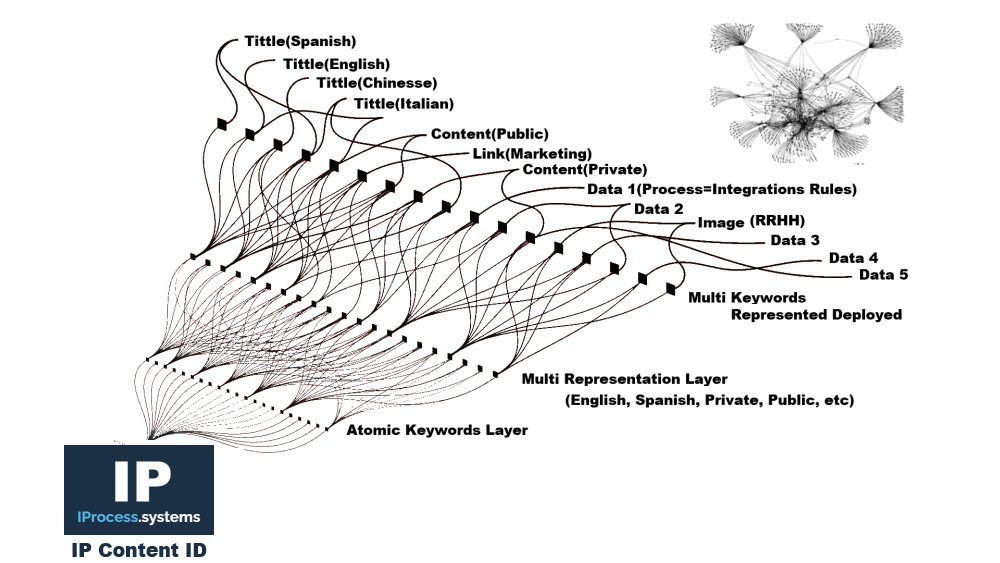
Agnostic Multidimensional System: IP Element ID.
An IP Element ID does not have an absolute definition.
Its existence and meaning can only be established in relative terms, depending on the number of determinations assigned to it at a specific moment.
It is agnostic because:
• It can be defined at one moment and mutate at another.
• It can grow, shrink, or transform according to time and the dimension in which it operates.
• It is not limited to a single representation: it can hold simultaneous relative values across multiple dimensions.
• Each relative value may be supported by underlying base meanings that are invisible to the operator, yet fundamental to the coherence of the system.
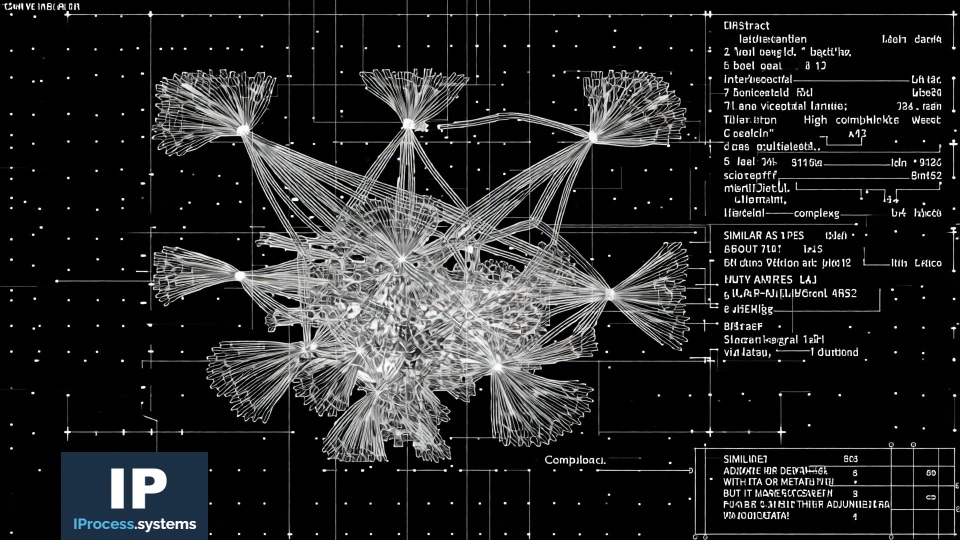
New Agnostic Architecture Paradigm.
OS More Technology by IProcess.Systems proposes a multidimensional, transversal, multi-representational architecture.
This new paradigm demonstrates that:
• Technologies such as Object-Oriented Programming, The advantages of the Pareto theorem, functional models, or other complex approaches are not the end goal, but instead emerge circumstantially according to need.
• Architecture ceases to be rigid and becomes a living, adaptable, and evolutionary system.
• The focus is no longer on the paradigm itself, but on the system’s ability to represent, process, and mutate information.
Main Areas of Application.
Education: Online learning platforms, virtual classrooms, digital libraries, AI tutors.
Healthcare: Electronic medical records, telemedicine, health apps, medical imaging, AI diagnostics.
Business & Commerce: E-commerce, digital payments, ERP systems, data analytics, CRM tools.
Communication:Email, messaging apps, video conferencing, social media, cloud collaboration.
Finance & Banking:Online banking, mobile payments, blockchain, fraud detection, algorithmic trading.
Manufacturing & Industry:Automation, robotics, IoT sensors, smart factories, supply-chain software.
Transportation & Logistics:GPS navigation, ride-sharing apps, traffic management systems, autonomous vehicles.
Government & Public Services:E-governance, digital IDs, online tax systems, smart city technologies.
Entertainment & Media: Streaming services, video games, virtual reality, digital content creation.
Agriculture: Precision farming, drones, weather prediction systems, smart irrigation.
Security & Defense: Cybersecurity, surveillance systems, encryption, defense simulations.
Science & Research: Big data analysis, simulations, AI research, cloud computing.
Environment & Energy: Smart grids, renewable energy management, climate modeling, environmental monitoring.
Retail & Marketing: Online shopping platforms, personalized ads, customer behavior analytics.
Sports & Fitness:Performance tracking, wearable devices, video analysis, fitness apps.
And going for more.....
Multi-representation of content.
Simultaneous visualization and management of multiple meanings and information structures, where multilingual websites, systems, documents, or platforms are among the applications and imagination is the limit.

Intelligent document digitization.
Definition, creation, and management of advanced digitization processes with full traceability.
Advanced workflows and BPM.
Orchestration of dynamic, adaptive, and multidimensional processes.

Massive statistical research and analysis.
Cross-referencing large volumes of data under multiple parameters and criteria, applicable to:
• Genetics
• Population studies
• Biology
• Applied sciences
• And more!

Artificial Intelligence and Machine Learning.
Implementation of multidimensional neural networks based on relative determinations.
Computing and Parallel Processing.
Advanced simulation as a transversal core, With robust traceability for multidimensional data processing.
Undefined Non-Relative Paradigm
There are no predefined limits of application.
The technology transcends known frameworks and goes beyond traditional IT design boundaries.

IT architecture that adapts to any platform or operating system.
Multiplatform and ultra-efficient technology for extreme use of processing power with a reduction of over 80% in corporate resources, including:
• IT infrastructure
• Servers
• Operational costs
• Time
Radical application of the Pareto Principle, optimized to the maximum.
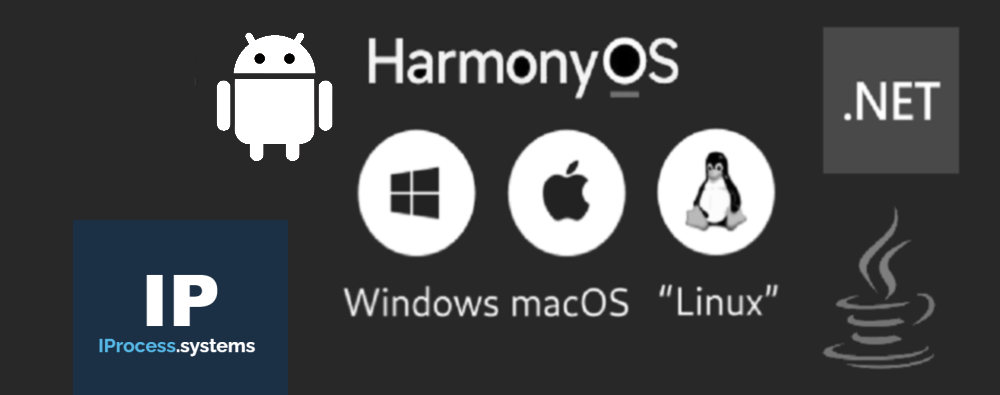
Container-Agnostic, Multi-Platform Functional Execution(No-Docker Container).
A lightweight execution model that encapsulates computational functionality without relying on OS-level containers or platform-specific runtimes. Functional units are isolated at the framework level, enabling on-the-fly execution across multiple platforms without rebuilds or container images. By eliminating container daemons, layered filesystems, and duplicated dependencies, this approach significantly reduces memory usage while delivering fast startup times and efficient scaling across heterogeneous environments.